
Progress benchmarks
How to assess progress in scissor-over-comb
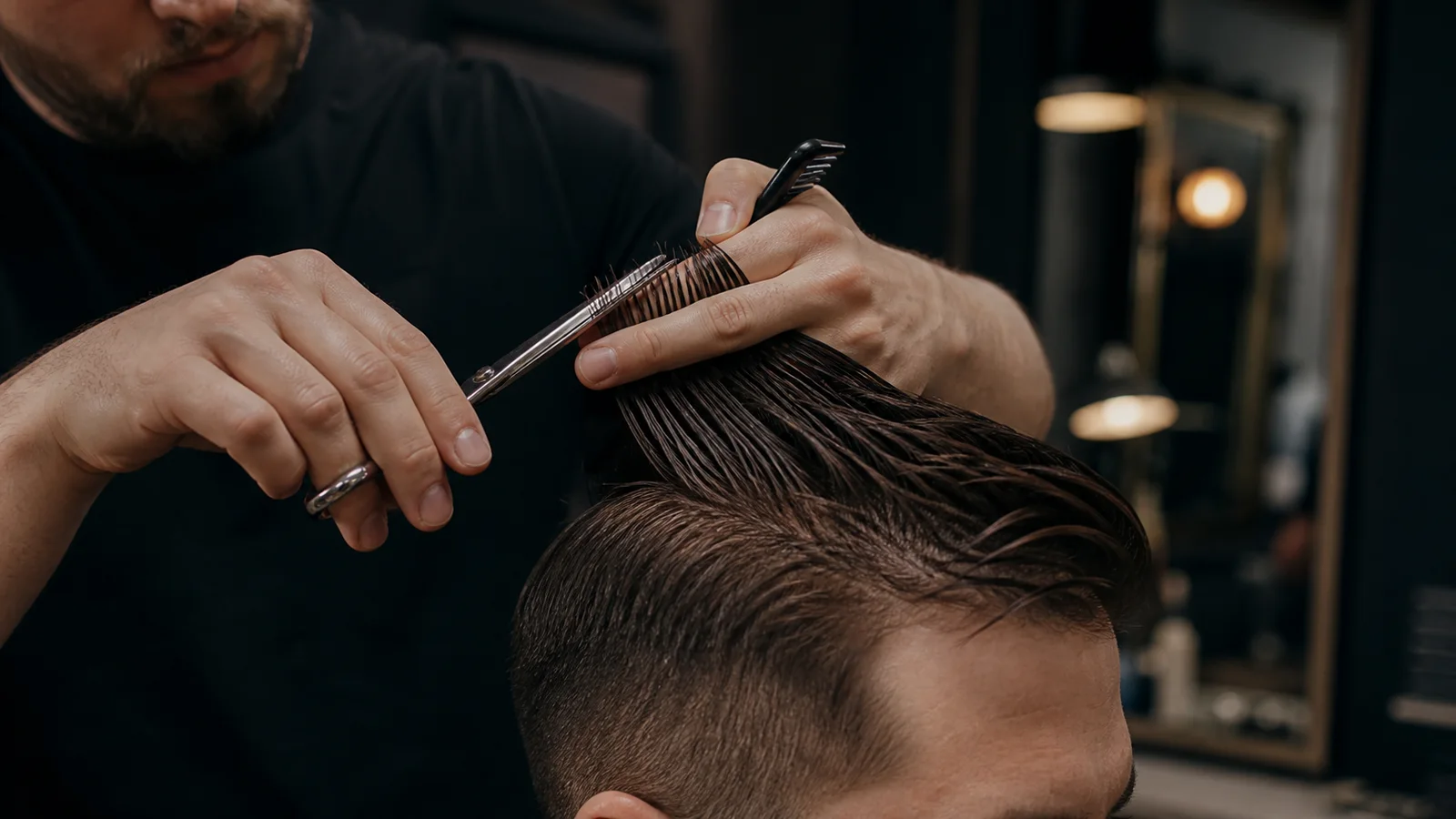
Scissor-over-comb refines short graduation by using the comb as a moving guide between the head and scissors. The goal is to present a small, controlled amount of hair and cut to the shape without gouging or creating steps.
Quick answer
What to remember.
- The goal is to present a small, controlled amount of hair and cut to the shape without gouging or creating steps.
- Keep the comb moving in small, readable increments.
- Keep scissor tips controlled around ears and facial features, and close the blades before changing position.
- Controlled scissor-over-comb creates a softer tailored finish and reduces harsh clipper marks.
Measure performance, not confidence alone
Scissor-over-comb refines short graduation by using the comb as a moving guide between the head and scissors. The goal is to present a small, controlled amount of hair and cut to the shape without gouging or creating steps.
Confidence can rise or fall for many reasons. Progress evidence should show what the learner planned, performed and repeated under comparable conditions.
Foundation benchmark
At foundation level, the learner can set up safely, name the sequence and complete a controlled attempt with frequent trainer prompts. The essential checkpoints are:
- Keep the comb moving in small, readable increments.
- Cut only the hair clearly presented beyond the comb.
- Match comb angle to the desired silhouette.
- Work with light rhythm and frequent visual checks.
Developing benchmark
A developing learner notices common problems earlier, including Loading too much hair into the comb.; Closing the scissors against a moving or unstable guide.; Following the skull automatically when the design requires shape.. They can pause, state the likely cause and choose a limited correction rather than waiting for rescue.
Practise lifting consistent panels with the comb first, then cut a mannequin zone using short sequences followed by a step-back check.
Consistency benchmark
Consistency means the result and process hold across more than one suitable model or scenario. Keep scissor tips controlled around ears and facial features, and close the blades before changing position.
- The surface reads even from multiple angles.
- The comb angle stays consistent through a planned zone.
- No local gouges appear from overloading the comb.
Sydney training context
How this topic fits into Sydney barber school training
Before selecting a Sydney barber school, ask how the program develops how to assess progress in scissor-over-comb from explanation to controlled practice. Specific answers are more useful than a long list of techniques with no detail about feedback.
The phrase “best barber school” is not an objective accreditation or a guaranteed outcome. The best choice for someone who wants to learn practical barbering skills depends on program status, supervised practice, trainer feedback, safety, total cost and fit with their intended pathway.
People who want to become a barber in Sydney should check current qualification and employment requirements separately from the marketing of any short course.
For a transparent example, review The Guild's private barber training program in Sydney, including its curriculum, A$5,000 fee and non-accredited status.
The Guild
Build the skill through corrected repetition.
Explore The Guild’s private 12-week curriculum and see how practical lessons, feedback and supervised training fit together.
View the curriculum →