
Mentor questions
Questions to ask your barber trainer about receiving barber trainer feedback
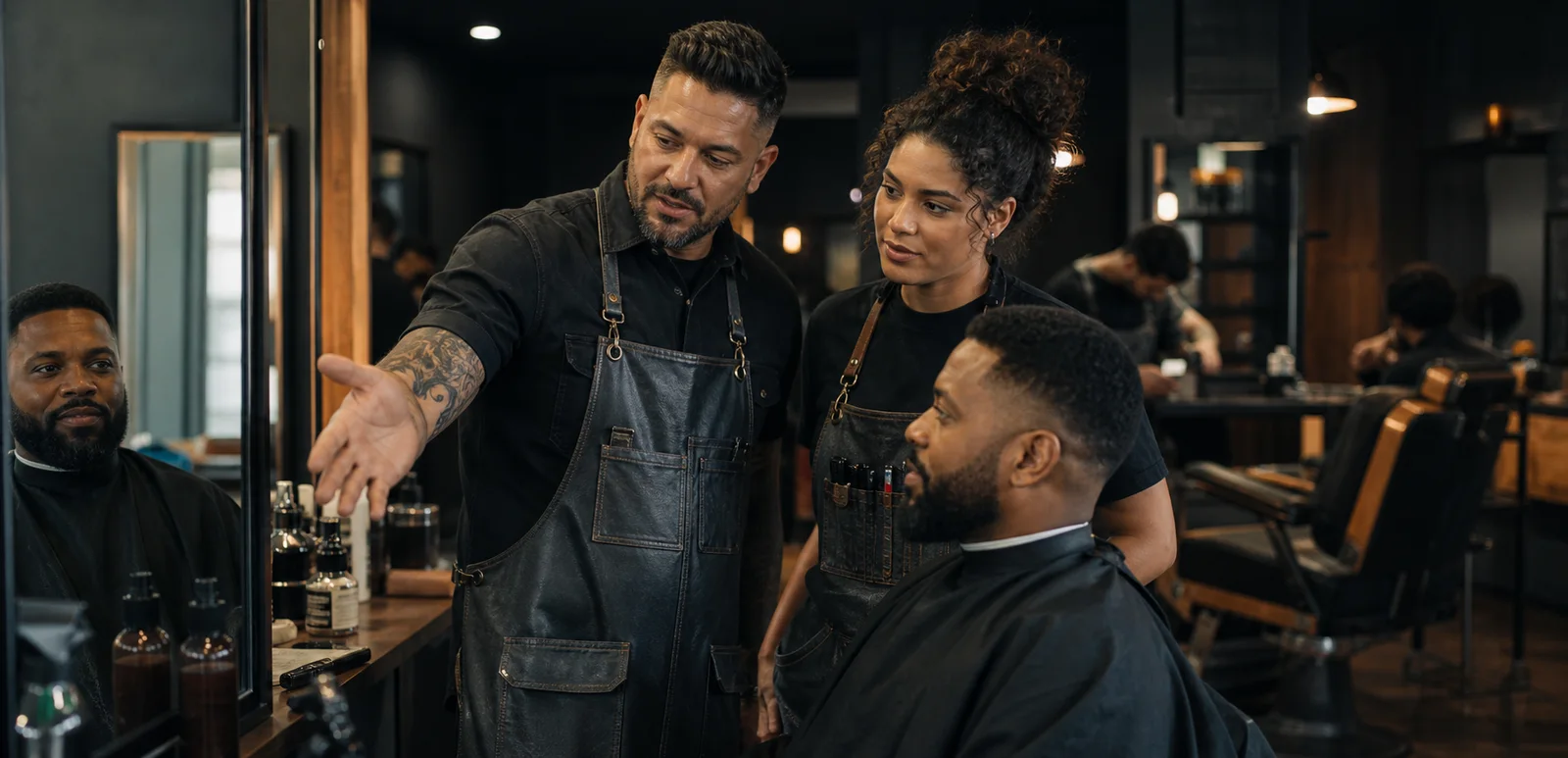
Useful feedback becomes action when a learner can identify the evidence, restate the correction and test it promptly. The goal is to turn instruction into one specific change rather than collecting comments without applying them.
Quick answer
What to remember.
- The goal is to turn instruction into one specific change rather than collecting comments without applying them.
- Listen to the complete observation before explaining.
- Pause immediately when feedback identifies a safety risk; safety corrections take priority over completing the technical sequence.
- Learners who use feedback well correct problems sooner and create a safer, more consistent service.
Questions about the plan
Useful feedback becomes action when a learner can identify the evidence, restate the correction and test it promptly. Ask questions that reveal the decision behind the movement, not only which tool to pick.
- What result should receiving barber trainer feedback create in this service?
- Which starting condition changes the plan most?
- What should I check before I begin?
Questions during the attempt
Use these principles as context: Listen to the complete observation before explaining. Ask which result or movement shows the issue. Restate the correction in your own words. Apply it to the next small attempt while the context is fresh.
- What evidence tells me to continue, change or stop?
- Which variable should I change first?
- Where is my movement or sequence becoming inconsistent?
Questions when the result is off
Bring a specific observation. Likely errors to rule out include Treating correction as a judgement of personal talent.; Asking for several fixes and remembering none.; Nodding without checking what to change physically..
- What do you see that I have not described?
- What is the smallest safe correction available?
- Should this be corrected now or protected from further work?
Turn the answer into the next attempt
After a trainer observation, write the evidence, the single next action and the result of the next attempt in three short lines. Pause immediately when feedback identifies a safety risk; safety corrections take priority over completing the technical sequence.
Review the attempt against these signals: The learner can name the observable issue.; The next attempt includes the stated change.; Progress notes show whether the change worked.. Record the trainer’s answer in your own words and test one change while the context is fresh.
Sydney training context
How this topic fits into Sydney barber school training
Someone choosing a Sydney barber school can use this guide to ask better questions about questions to ask your barber trainer about receiving barber trainer feedback. The provider should be able to describe the learning sequence, trainer support and limits around client work.
The phrase “best barber school” is not an objective accreditation or a guaranteed outcome. The best choice for someone who wants to learn practical barbering skills depends on program status, supervised practice, trainer feedback, safety, total cost and fit with their intended pathway.
If your aim is to learn barbering in Sydney, connect each course claim to an observable learning condition: practice time, model suitability, individual correction and realistic progression.
For a transparent example, review The Guild's private barber training program in Sydney, including its curriculum, A$5,000 fee and non-accredited status.
The Guild
Build the skill through corrected repetition.
Explore The Guild’s private 12-week curriculum and see how practical lessons, feedback and supervised training fit together.
View the curriculum →