
Lesson plan
A practical lesson plan for deliberate barbering practice
Deliberate practice isolates a specific weakness, creates a measurable drill and uses feedback to shape the next attempt. The goal is to replace vague repetition with short cycles of plan, attempt, observation and correction.
Quick answer
What to remember.
- The goal is to replace vague repetition with short cycles of plan, attempt, observation and correction.
- Choose one observable skill for each session.
- Use mannequins or appropriately consented models and keep the drill within the learner’s supervised level of competence.
- Focused practice develops consistency before a learner takes on more complex client work.
Set one observable lesson outcome
Deliberate practice isolates a specific weakness, creates a measurable drill and uses feedback to shape the next attempt. The goal is to replace vague repetition with short cycles of plan, attempt, observation and correction.
Write the outcome as something a trainer can see or hear. Avoid goals such as “understand it better”; name the movement, decision, sequence or finished feature the learner should reproduce.
Demonstrate the decision as well as the action
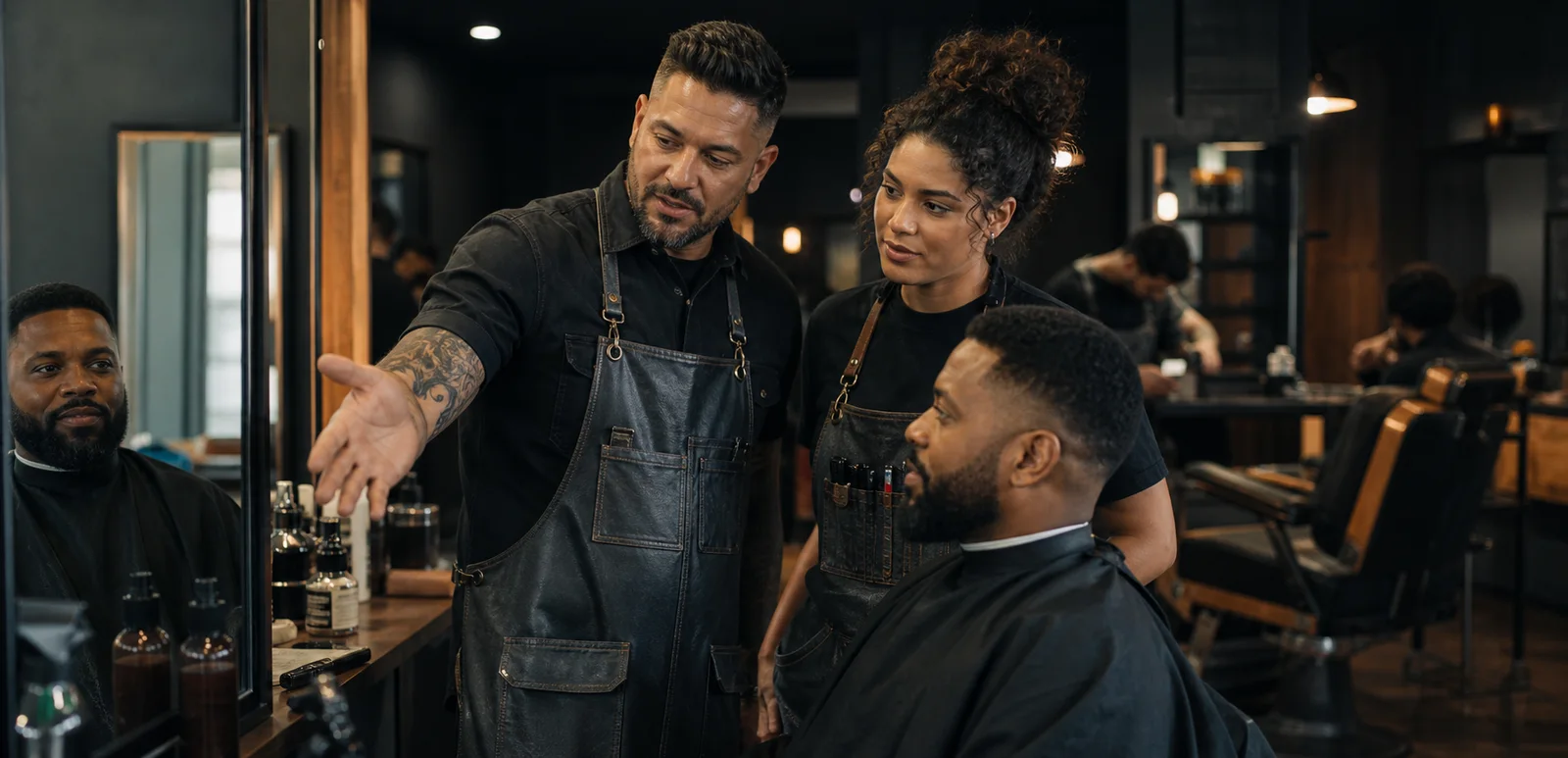
The trainer should name what they are looking at, which option they choose and how they will know when to stop. The learner then repeats the decision before copying the movement.
- Choose one observable skill for each session.
- Set a constraint, target and time window.
- Record what happened rather than how it felt.
- Change one variable in the next attempt.
Move from guided to independent practice
Begin with this controlled exercise: Select one recurring problem, complete three short attempts under the same conditions and compare them against one criterion before changing the plan.
Watch specifically for Practising complete haircuts while ignoring the same weak step.; Changing tools and methods after every attempt.; Counting hours without recording evidence.. Correct one cause at a time so the learner can connect the change with the result.
Close with evidence and a next action
Use mannequins or appropriately consented models and keep the drill within the learner’s supervised level of competence. End the lesson by recording one success, one priority and the exact condition for the next attempt.
- The target is visible and measurable.
- Attempts can be compared under similar conditions.
- The next change follows from observed evidence.
Sydney training context
How this topic fits into Sydney barber school training
If you are comparing a Sydney barber school, use a practical lesson plan for deliberate barbering practice as a concrete quality check. Ask how this learning & assessment subject is demonstrated, practised, corrected and assessed before you enrol.
The phrase “best barber school” is not an objective accreditation or a guaranteed outcome. The best choice for someone who wants to learn practical barbering skills depends on program status, supervised practice, trainer feedback, safety, total cost and fit with their intended pathway.
People searching for a barber course in Sydney should compare the written curriculum, training status, supervised floor time, class size, total cost and next pathway—not only the headline duration.
For a transparent example, review The Guild's private barber training program in Sydney, including its curriculum, A$5,000 fee and non-accredited status.
The Guild
Build the skill through corrected repetition.
Explore The Guild’s private 12-week curriculum and see how practical lessons, feedback and supervised training fit together.
View the curriculum →