
Lesson plan
A practical lesson plan for receiving barber trainer feedback
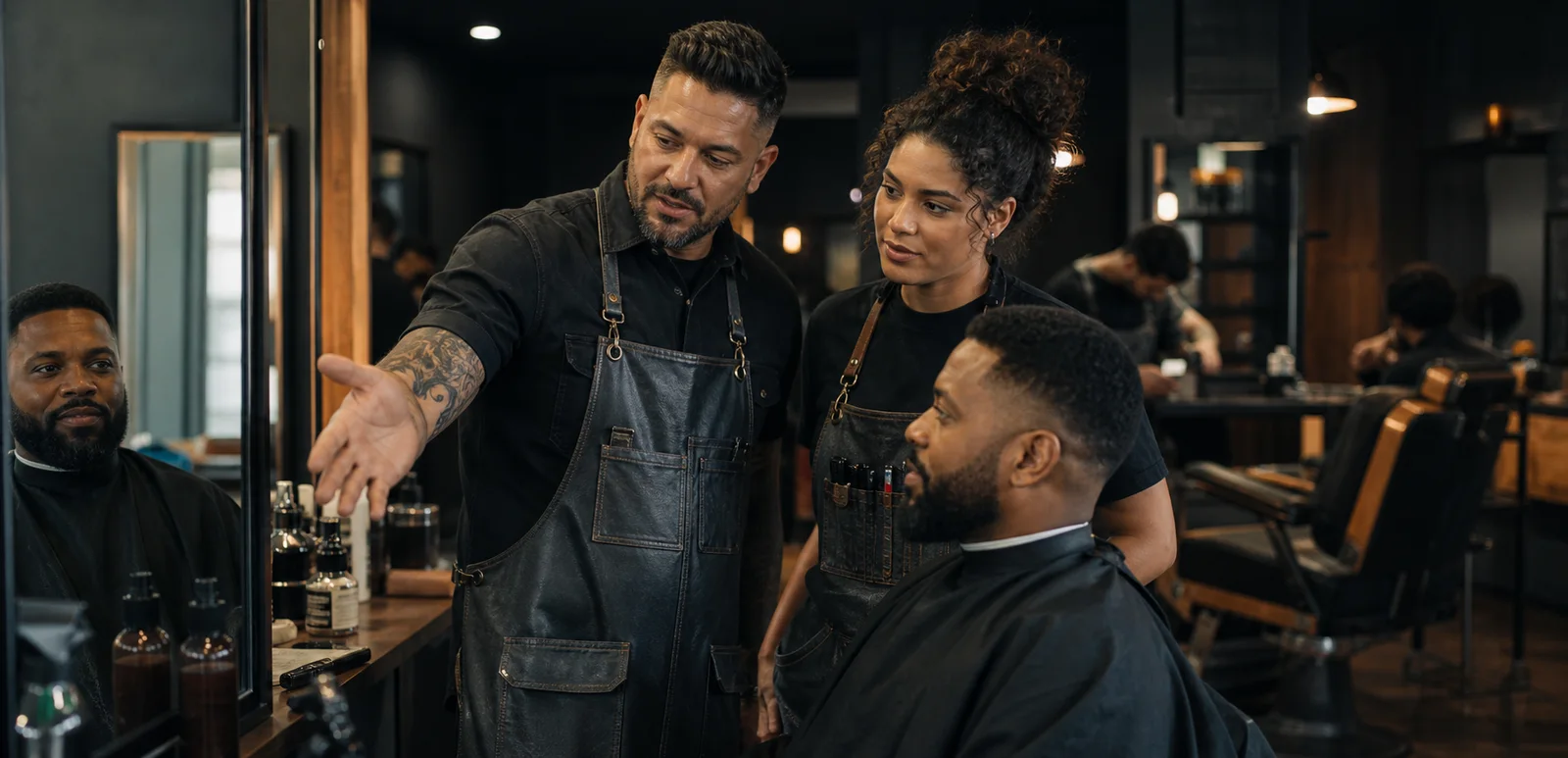
Useful feedback becomes action when a learner can identify the evidence, restate the correction and test it promptly. The goal is to turn instruction into one specific change rather than collecting comments without applying them.
Quick answer
What to remember.
- The goal is to turn instruction into one specific change rather than collecting comments without applying them.
- Listen to the complete observation before explaining.
- Pause immediately when feedback identifies a safety risk; safety corrections take priority over completing the technical sequence.
- Learners who use feedback well correct problems sooner and create a safer, more consistent service.
Set one observable lesson outcome
Useful feedback becomes action when a learner can identify the evidence, restate the correction and test it promptly. The goal is to turn instruction into one specific change rather than collecting comments without applying them.
Write the outcome as something a trainer can see or hear. Avoid goals such as “understand it better”; name the movement, decision, sequence or finished feature the learner should reproduce.
Demonstrate the decision as well as the action
The trainer should name what they are looking at, which option they choose and how they will know when to stop. The learner then repeats the decision before copying the movement.
- Listen to the complete observation before explaining.
- Ask which result or movement shows the issue.
- Restate the correction in your own words.
- Apply it to the next small attempt while the context is fresh.
Move from guided to independent practice
Begin with this controlled exercise: After a trainer observation, write the evidence, the single next action and the result of the next attempt in three short lines.
Watch specifically for Treating correction as a judgement of personal talent.; Asking for several fixes and remembering none.; Nodding without checking what to change physically.. Correct one cause at a time so the learner can connect the change with the result.
Close with evidence and a next action
Pause immediately when feedback identifies a safety risk; safety corrections take priority over completing the technical sequence. End the lesson by recording one success, one priority and the exact condition for the next attempt.
- The learner can name the observable issue.
- The next attempt includes the stated change.
- Progress notes show whether the change worked.
Sydney training context
How this topic fits into Sydney barber school training
When reviewing a Sydney barber school, turn a practical lesson plan for receiving barber trainer feedback into a provider question rather than accepting a broad promise. Find out who teaches it, how often students repeat it and how the result is reviewed.
The phrase “best barber school” is not an objective accreditation or a guaranteed outcome. The best choice for someone who wants to learn practical barbering skills depends on program status, supervised practice, trainer feedback, safety, total cost and fit with their intended pathway.
A barber academy in Sydney should describe its program status honestly, explain its safety boundaries and show how trainer feedback changes a learner’s next attempt.
For a transparent example, review The Guild's private barber training program in Sydney, including its curriculum, A$5,000 fee and non-accredited status.
The Guild
Build the skill through corrected repetition.
Explore The Guild’s private 12-week curriculum and see how practical lessons, feedback and supervised training fit together.
View the curriculum →