
Trainer checklist
Barbering layers trainer checklist
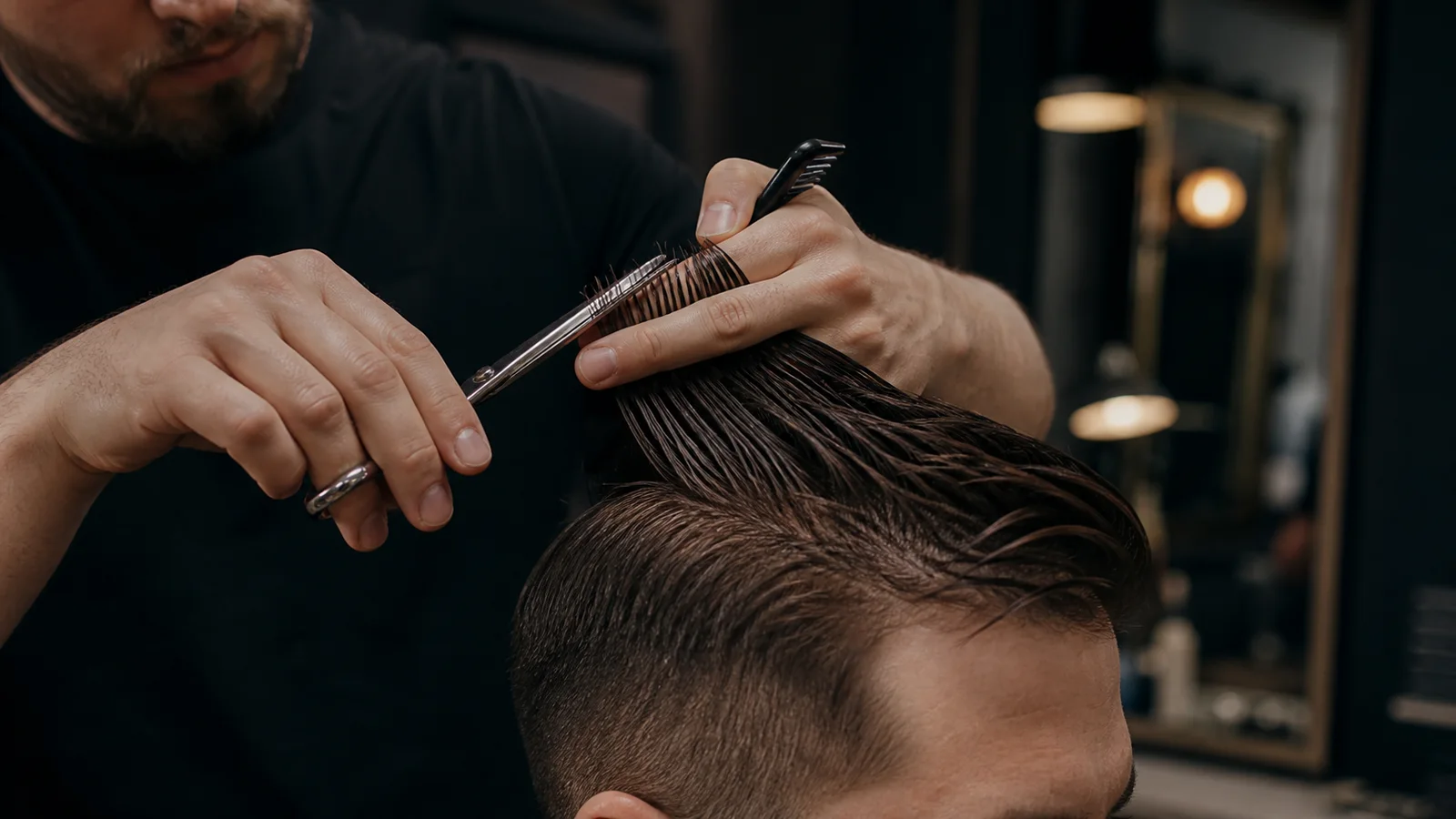
Layering creates internal movement and removes weight while preserving the perimeter and overall design. The goal is to choose a guide, elevation and overdirection pattern that produces a predictable relationship between lengths.
Quick answer
What to remember.
- The goal is to choose a guide, elevation and overdirection pattern that produces a predictable relationship between lengths.
- Define the perimeter and internal shape separately.
- Use stable body position and controlled scissor tips, particularly around the crown, ears and face.
- Well-planned layers support movement, styling flexibility and a shape that grows with less heaviness.
Before the attempt
Confirm the learner can state the goal: The goal is to choose a guide, elevation and overdirection pattern that produces a predictable relationship between lengths.
Check that the task, tools, model, time and supervision match the learner’s current level. Ask the learner to point out the stop conditions before beginning.
During the attempt
Observe the sequence and decision-making rather than waiting only for the final result. Use these points as prompts:
- Define the perimeter and internal shape separately.
- Choose a stationary or travelling guide deliberately.
- Keep overdirection consistent through matching zones.
- Dry and move the hair before refining internal weight.
When to intervene
Intervene early for safety or consent concerns. For technical learning, watch for Following a lost guide by cutting shorter and shorter.; Layering without protecting the front or perimeter length.; Using inconsistent tension around changes in density.. Ask what the learner sees before supplying the answer.
Use stable body position and controlled scissor tips, particularly around the crown, ears and face.
After the attempt
Use the same viewing conditions and ask the learner to identify evidence first. Well-planned layers support movement, styling flexibility and a shape that grows with less heaviness.
- The guide remains identifiable through the pattern.
- Internal movement supports the planned silhouette.
- The perimeter retains the agreed length and density.
Sydney training context
How this topic fits into Sydney barber school training
If you are comparing a Sydney barber school, use barbering layers trainer checklist as a concrete quality check. Ask how this scissor work & shape subject is demonstrated, practised, corrected and assessed before you enrol.
The phrase “best barber school” is not an objective accreditation or a guaranteed outcome. The best choice for someone who wants to learn practical barbering skills depends on program status, supervised practice, trainer feedback, safety, total cost and fit with their intended pathway.
People searching for a barber course in Sydney should compare the written curriculum, training status, supervised floor time, class size, total cost and next pathway—not only the headline duration.
For a transparent example, review The Guild's private barber training program in Sydney, including its curriculum, A$5,000 fee and non-accredited status.
The Guild
Build the skill through corrected repetition.
Explore The Guild’s private 12-week curriculum and see how practical lessons, feedback and supervised training fit together.
View the curriculum →