Student guide
What to expect from your first barber course
Your first course should give you a safe process for learning, not pressure you to look experienced before you have built the fundamentals.
Quick answer
What to remember.
- Expect demonstrations, drills, supervised attempts, feedback and repetition—not instant speed.
- Confirm tools, models, clothing, schedule and policies before the first day.
- Mistakes are useful when safety is protected and feedback changes the next attempt.
- Attendance and practice between sessions have a large effect on progress.
Before day one
Read the written course details rather than relying on social posts. Confirm the address, start and finish times, training days, fee, tool inclusions, clothing, model expectations, missed-session process, qualification status and who to contact if you need an adjustment.
Arrive with realistic expectations. A beginner is not expected to move like an experienced barber. You are expected to listen, ask when unsure, work safely and repeat the foundations with attention.
What a useful training session looks like
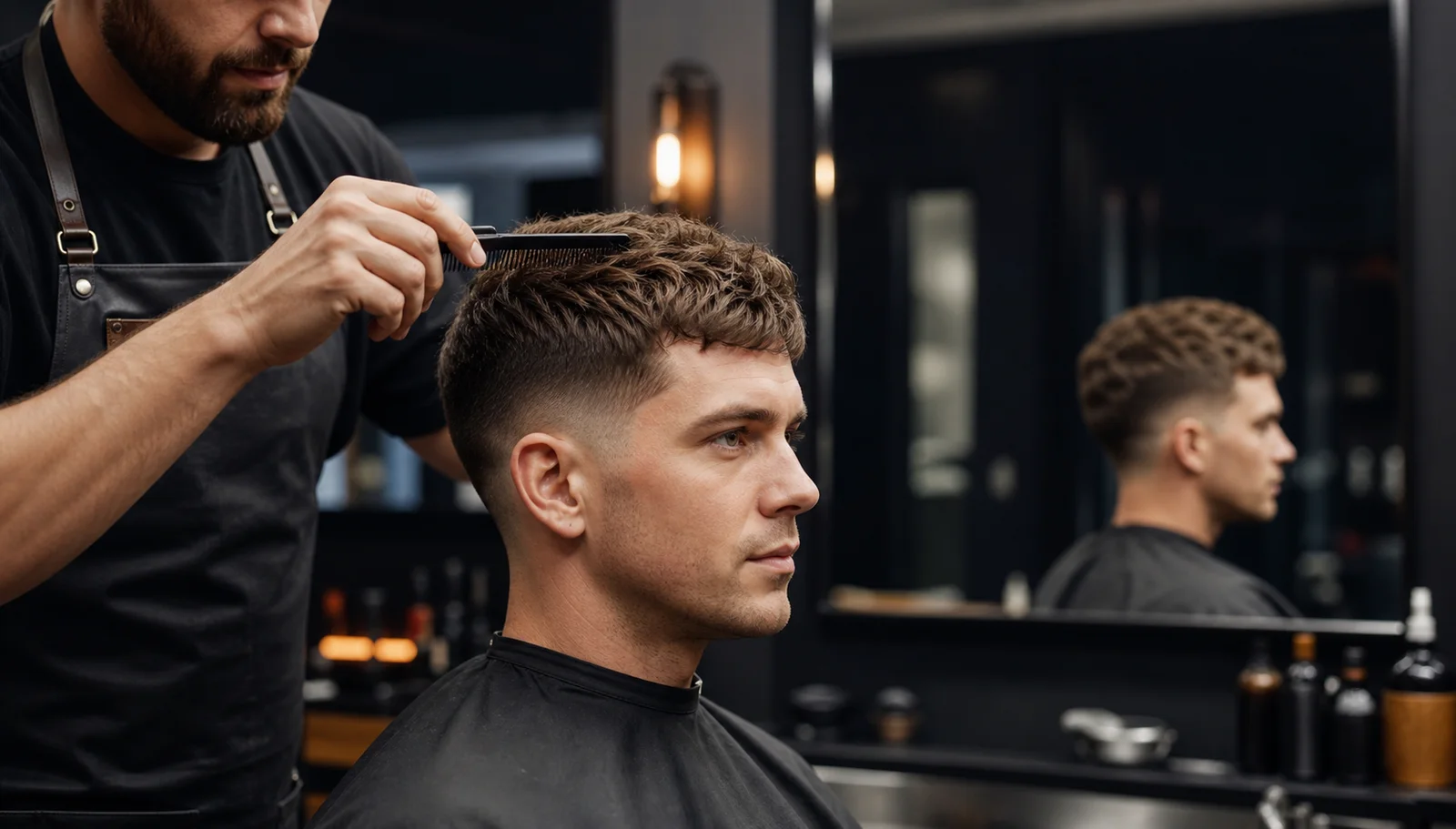
A practical session often begins with the intended outcome and a demonstration. The trainer should explain not only what movement to copy, but what visual or structural change that movement creates. Students then practise, receive correction and try again.
There should also be time for setup, consultation, hygiene, photography or evidence where permitted, reflection and clean-down. Those steps are part of the service, not time taken away from learning.
How to use feedback well
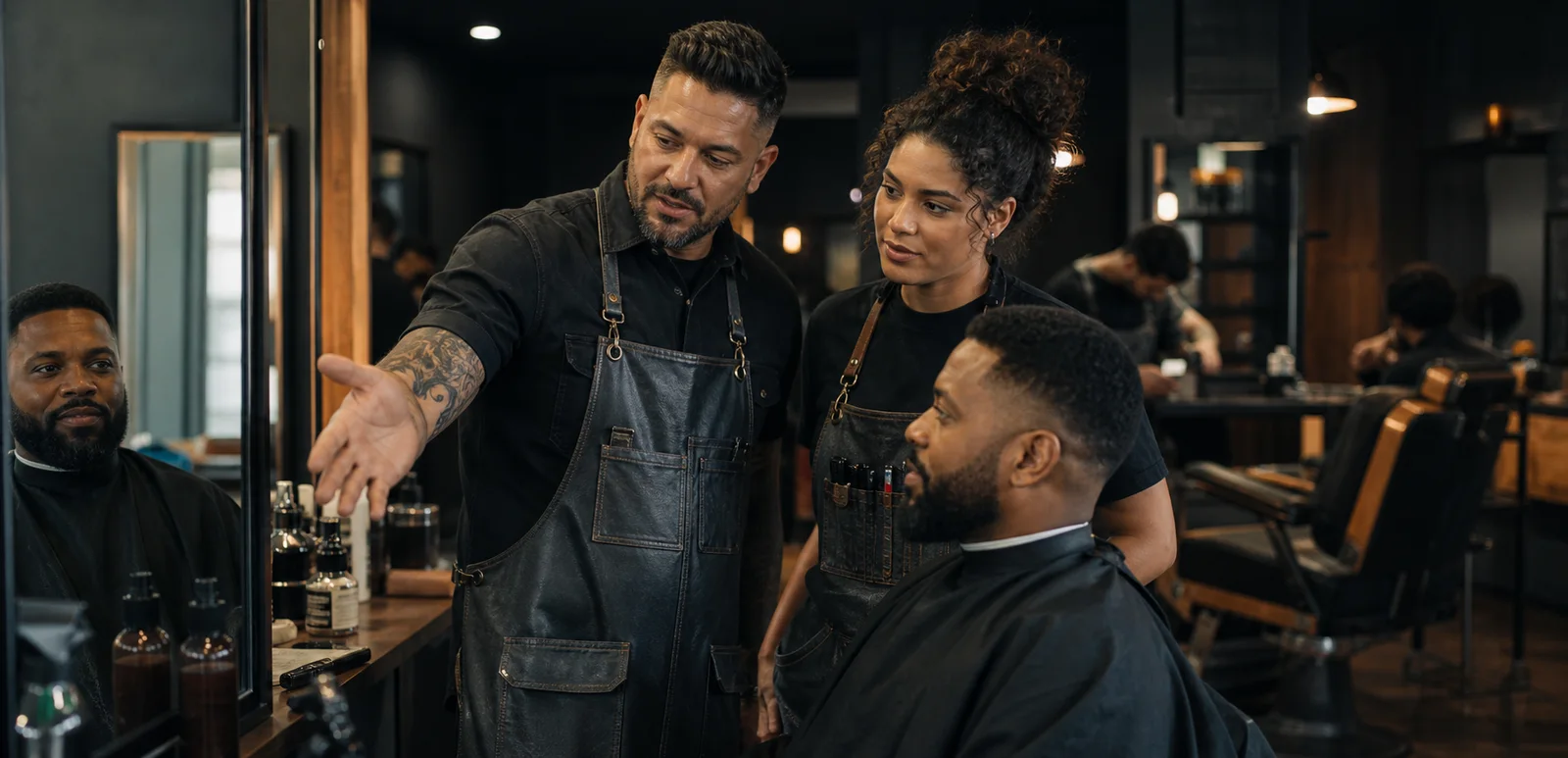
Correction can feel direct in a practical craft. It should still be respectful, specific and connected to an observable standard. Ask for clarification when a direction is too broad to act on.
- Ask the trainer to identify the first point where the result went off plan.
- Repeat the correction in your own words before trying it.
- Focus on one or two changes at a time rather than collecting ten notes you cannot apply.
- Record the feedback in a practice log with photos only where consent permits.
- Return to the same weakness in the next session so the note becomes a movement.
Working with clients and models
A model is not only a head of hair to practise on. They are a person who should understand that a student is performing the service, what supervision exists, what has been agreed and how images may be used. Their comfort and consent matter throughout.
Students should perform only authorised services, report any injury or reaction immediately and ask for help before a mistake becomes a safety problem. Secret recording or posting identifiable content without permission is not acceptable.
What happens when you make a mistake
Every learner makes technical mistakes. The learning value comes from identifying the cause early: an uneven guideline, a lost section, too much pressure, poor tension or a consultation that missed an important detail.
A safe course does not pretend mistakes never happen. It defines supervision, gives the trainer authority to step in, treats the model respectfully and helps the student understand the next prevention step.
Practice between sessions
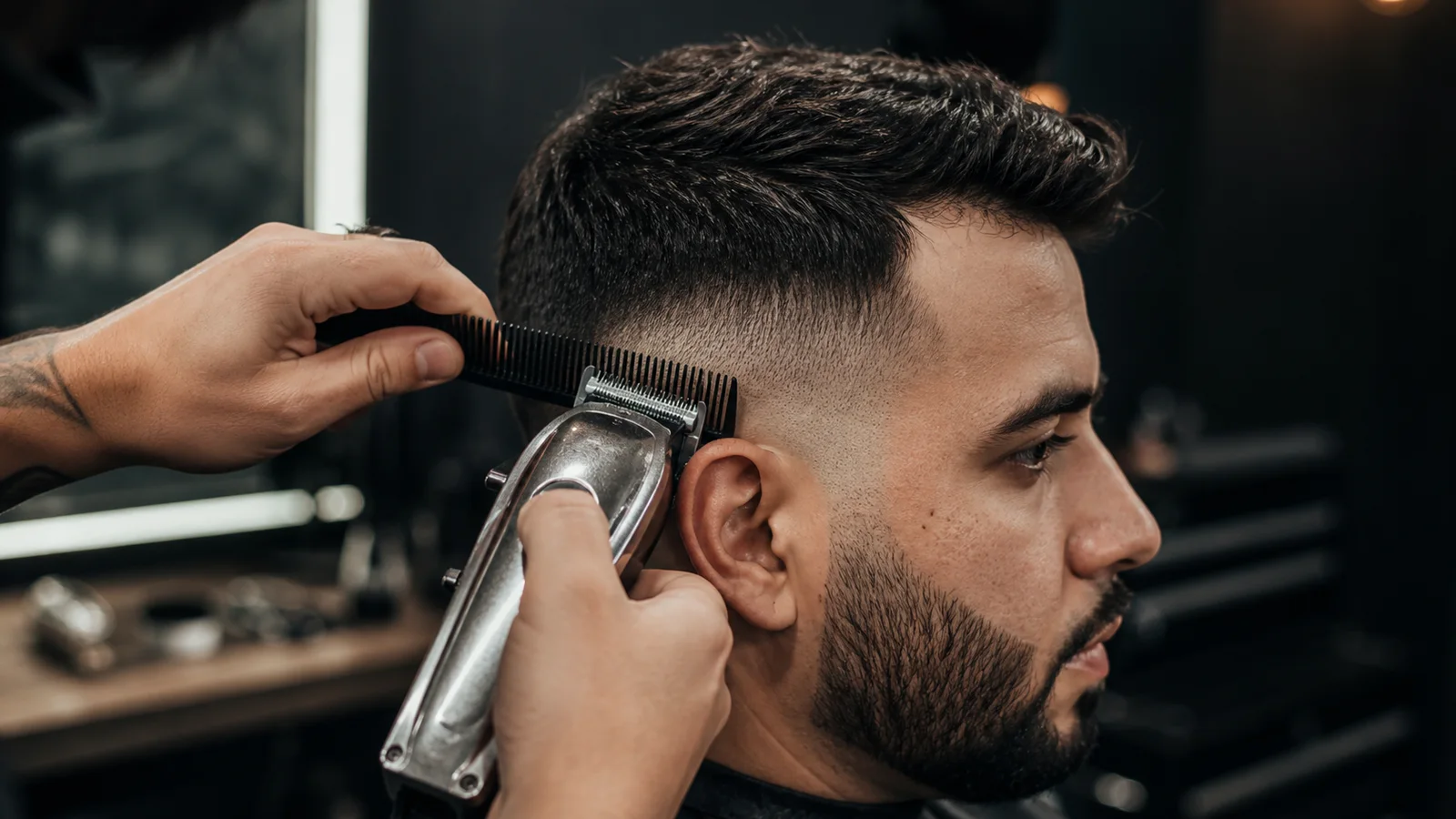
Ask what can be practised safely outside class. Some movements can be drilled on a mannequin or through sectioning and comb-control exercises. Live services require appropriate skill, consent, hygiene, equipment and—where relevant—supervision and legal authority.
Short, frequent practice with a defined focus is usually more useful than an occasional long session with no feedback. Keep a log of attempts and bring questions back to training.
Attendance, support and adjustments
Tell the provider early if work, caring duties, language, learning needs, health or mobility may affect participation. You do not need to disclose unrelated private information. Explain the practical barrier or adjustment you are requesting so options can be discussed.
If you miss a class, contact the team promptly and ask what was covered, what can be made up and how the absence affects completion. Do not wait until the final week to discover a gap.
What you should leave with
A first course should leave you with a repeatable process, safer habits, a clearer eye and an honest understanding of your next development step. It should also be completely clear what any certificate represents and whether further recognised training or supervised experience is required for your goal.
Sydney training context
How this topic fits into Sydney barber school training
Someone choosing a Sydney barber school can use this guide to ask better questions about what to expect from your first barber course. The provider should be able to describe the learning sequence, trainer support and limits around client work.
The phrase “best barber school” is not an objective accreditation or a guaranteed outcome. The best choice for someone who wants to learn practical barbering skills depends on program status, supervised practice, trainer feedback, safety, total cost and fit with their intended pathway.
If your aim is to learn barbering in Sydney, connect each course claim to an observable learning condition: practice time, model suitability, individual correction and realistic progression.
For a transparent example, review The Guild's private barber training program in Sydney, including its curriculum, A$5,000 fee and non-accredited status.
The Guild
Ask the questions before day one.
A Guild Discovery Session covers your goals, availability, current experience and whether the private 12-week program is the right next step.
Book a Discovery Session →