
Practice drills
Practice drills for stronger fade blending
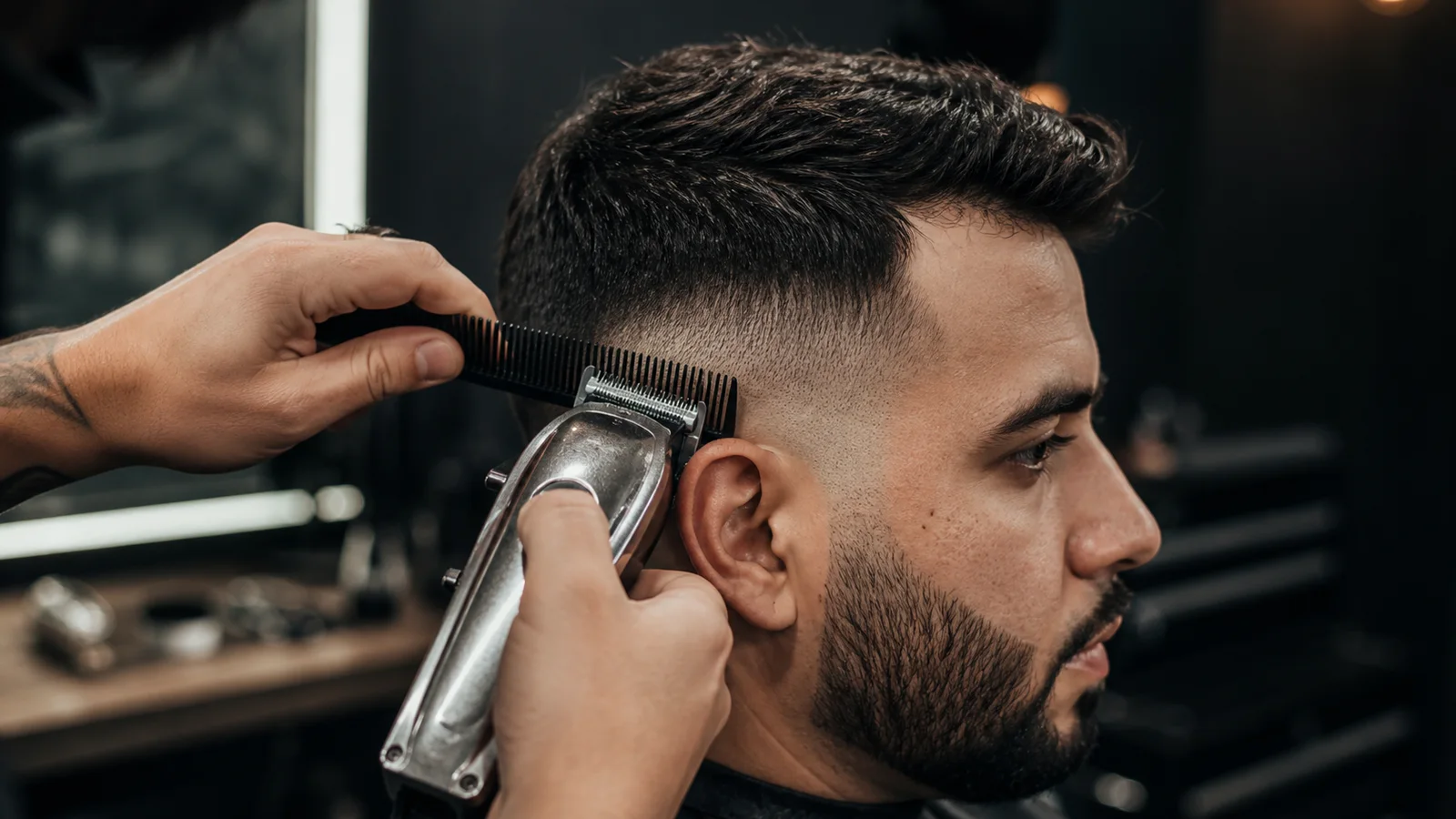
Fade blending removes visible transitions while preserving a deliberate shape, weight distribution and connection to the top. The goal is to diagnose the length causing a shadow, choose the matching tool setting and stop when the transition is resolved.
Quick answer
What to remember.
- The goal is to diagnose the length causing a shadow, choose the matching tool setting and stop when the transition is resolved.
- Identify whether a mark is a line, shadow, weight pocket or lighting effect.
- Limit repeated friction in one area and stop if the skin becomes irritated or uncomfortable.
- A controlled blend looks cleaner as it grows and avoids unnecessary removal above the agreed fade height.
Choose a narrow practice target
Fade blending removes visible transitions while preserving a deliberate shape, weight distribution and connection to the top. The goal is to diagnose the length causing a shadow, choose the matching tool setting and stop when the transition is resolved.
Pick one element that can be observed in a short session. Keep the model, tool setting, view and success criterion as consistent as practical.
Run the core drill
Photograph a practice fade under consistent light, mark three transition zones, state the diagnosis and tool choice for each, then compare the after image.
Complete a baseline attempt, one corrected attempt and one repeat. Photograph or record only what is permitted and useful for comparison.
- Identify whether a mark is a line, shadow, weight pocket or lighting effect.
- Work from known lengths toward the uncertain area.
- Use corner work for local corrections.
- Step back regularly to read the complete silhouette.
Add a constraint only after control
Once the basic sequence is repeatable, vary one condition such as viewing angle, timing, density or scenario. Avoid Attacking every dark area with the shortest setting.; Blending continuously without stepping back.; Confusing natural density or lighting with remaining weight..
If the outcome changes, identify which variable caused it before adding another challenge.
Debrief the evidence
Limit repeated friction in one area and stop if the skin becomes irritated or uncomfortable.
Write one sentence for the plan, one for the observed result and one for the next attempt.
- Transitions read smoothly in more than one light direction.
- Corrections become smaller as the blend develops.
- The planned top connection and profile remain intact.
Sydney training context
How this topic fits into Sydney barber school training
When reviewing a Sydney barber school, turn practice drills for stronger fade blending into a provider question rather than accepting a broad promise. Find out who teaches it, how often students repeat it and how the result is reviewed.
The phrase “best barber school” is not an objective accreditation or a guaranteed outcome. The best choice for someone who wants to learn practical barbering skills depends on program status, supervised practice, trainer feedback, safety, total cost and fit with their intended pathway.
A barber academy in Sydney should describe its program status honestly, explain its safety boundaries and show how trainer feedback changes a learner’s next attempt.
For a transparent example, review The Guild's private barber training program in Sydney, including its curriculum, A$5,000 fee and non-accredited status.
The Guild
Build the skill through corrected repetition.
Explore The Guild’s private 12-week curriculum and see how practical lessons, feedback and supervised training fit together.
View the curriculum →