
Beginner guide
Beginner barber skills to build before buying more tools
A new tool can change a detail. It cannot replace a stable hand, a clear plan or the ability to see why a shape is not working.
Quick answer
What to remember.
- Buy a small, reliable core kit and learn exactly what each tool changes.
- Consultation and shape decisions happen before the first clipper pass.
- Body position, pressure, tension and light explain many “tool problems”.
- Safe cleaning and organisation are professional skills, not optional extras.
The beginner gear trap
New barbers are surrounded by clipper comparisons, limited releases and endless accessory lists. Good equipment matters, but early inconsistency is rarely solved by owning more versions of the same tool. It is more often caused by unclear guidelines, changing pressure, weak sectioning, poor light or a plan that was never confirmed.
A compact kit makes cause and effect easier to learn. When you know how one clipper, trimmer, foil shaver, comb and scissor behave, you can identify whether a result came from the tool, the setup or your movement.
1. Consultation and visual planning
Before touching the hair, clarify length, shape, maintenance, workplace needs, previous problems and how the client styles it. Use references carefully: identify what the client likes about an image rather than promising an identical result on different density, growth patterns and head shape.
Translate the conversation into a plan. Where will the shortest area sit? Where will weight remain? What must connect? What should not be removed? A clear plan prevents the cut from becoming a series of reactions.
2. Clipper control and body position
Learn to feel the difference between a flat blade, a lifted angle and a scooping motion. Keep the wrist neutral, move the body instead of twisting into an unstable position and use the mirror to check balance rather than staying inches from one small area.
Practise placing consistent guidelines and removing them using deliberate lever and guard choices. Do not keep passing over a dark area without naming what you are trying to change.
3. Sectioning, shape and weight
A clean fade can still produce a poor haircut if the overall shape is ignored. Learn to see the head in zones, maintain or remove weight intentionally, and connect the sides to the top without flattening every client into the same silhouette.
Sectioning makes the plan visible. It creates repeatable boundaries, protects areas you are not working on and helps compare left and right without guessing.
4. Scissor and comb fundamentals
Strong scissor work begins with grip, comb control, consistent tension and a guide you can actually see. Learn where your fingers are relative to the blade and client. Build accuracy on simple shapes before adding fast movement or elaborate texturising.
More thinning is not always the answer to visible weight. First determine whether the problem is length, elevation, over-direction, connection or styling.
5. Detailing without overworking
Detailing should refine a completed structure. Step back, change the viewing angle, use clean light and identify the precise area that interrupts the shape. Work in small, reversible decisions.
Beginners often create a new problem by trying to erase every natural variation. Density, colour and growth direction affect how a blend reads. The objective is controlled balance, not an edited photograph.
6. Hygiene, safety and station discipline
A calm station reduces mistakes. Set tools in a consistent order, return them to the same position and clean as part of the service—not as an afterthought once the next client is waiting.
- Clean hands at the appropriate points in the service.
- Follow product directions for cleaning and disinfecting tools and surfaces.
- Separate clean and used equipment and dispose of sharps safely.
- Inspect cords, blades and guards before use and stop using damaged equipment.
- Keep the floor and work area free of trip hazards and loose hair build-up.
- Report cuts, reactions, equipment faults and hazards immediately.
7. Self-review and feedback
Take consistent photos with permission: front, both profiles, back and top connection. Compare them to the original plan. Name one strength, one cause of inconsistency and one action for the next attempt.
The ability to diagnose your own work becomes more valuable than another accessory. It lets you use every future tool with intention.
A sensible core kit
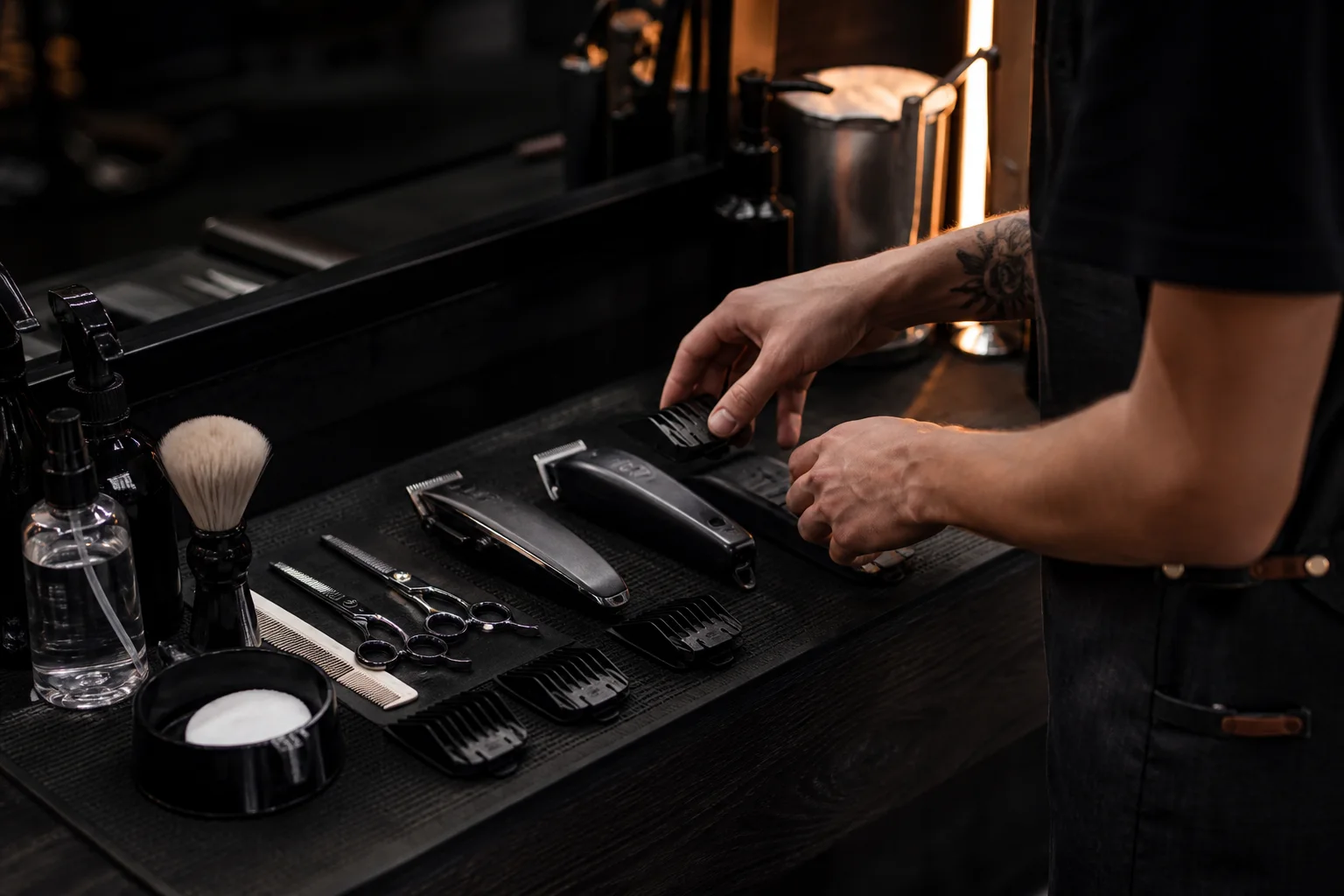
For supervised beginner practice, a typical core kit may include a dependable adjustable clipper with guards, a trimmer, barbering scissors, cutting and clipper combs, sectioning clips, spray bottle, neck brush, cape and provider-approved cleaning and disinfection supplies. A foil shaver or razor should be introduced with appropriate safety instruction.
Ask your trainer what is supplied and what specifications are needed before buying. Compatibility, safe maintenance and serviceability matter more than matching someone else’s collection.
Sydney training context
How this topic fits into Sydney barber school training
When reviewing a Sydney barber school, turn beginner barber skills to build before buying more tools into a provider question rather than accepting a broad promise. Find out who teaches it, how often students repeat it and how the result is reviewed.
The phrase “best barber school” is not an objective accreditation or a guaranteed outcome. The best choice for someone who wants to learn practical barbering skills depends on program status, supervised practice, trainer feedback, safety, total cost and fit with their intended pathway.
A barber academy in Sydney should describe its program status honestly, explain its safety boundaries and show how trainer feedback changes a learner’s next attempt.
For a transparent example, review The Guild's private barber training program in Sydney, including its curriculum, A$5,000 fee and non-accredited status.
The Guild
Build control in sequence.
The Guild starts with tool control, blending foundations and deliberate practice before moving through more complex services.
See the curriculum →