
Lesson plan
A practical lesson plan for beard shape and balance
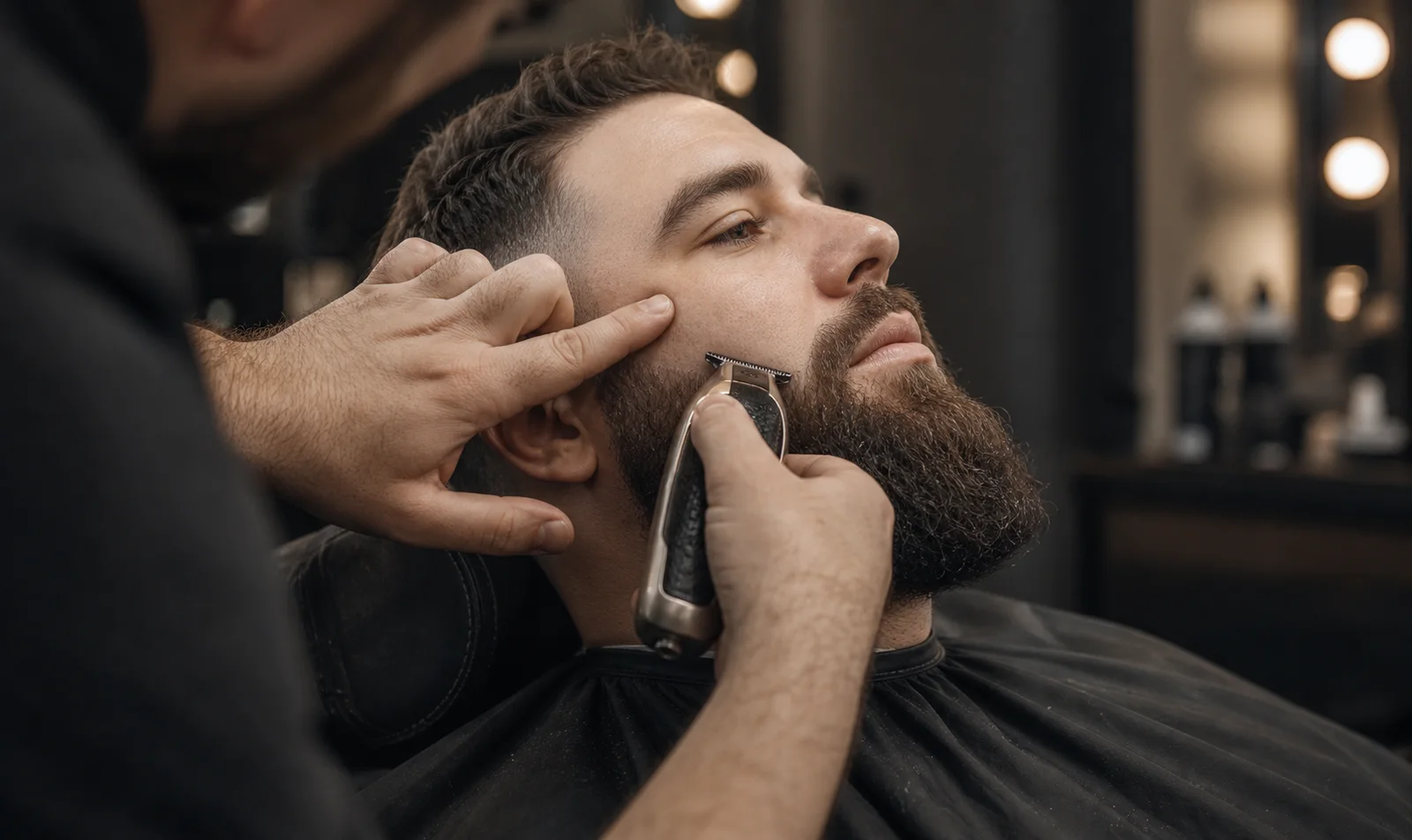
Beard shaping uses length distribution and outline to support the face while respecting natural density and growth. The goal is a balanced silhouette that reads clean from the front, profile and underneath.
Quick answer
What to remember.
- The goal is a balanced silhouette that reads clean from the front, profile and underneath.
- Establish the intended front shape before refining details.
- Use guards and controlled tool angles around loose skin, and stop if the skin shows irritation.
- Balanced shaping makes the beard look intentional and easier to maintain between visits.
Set one observable lesson outcome
Beard shaping uses length distribution and outline to support the face while respecting natural density and growth. The goal is a balanced silhouette that reads clean from the front, profile and underneath.
Write the outcome as something a trainer can see or hear. Avoid goals such as “understand it better”; name the movement, decision, sequence or finished feature the learner should reproduce.
Demonstrate the decision as well as the action
The trainer should name what they are looking at, which option they choose and how they will know when to stop. The learner then repeats the decision before copying the movement.
- Establish the intended front shape before refining details.
- Protect density in naturally sparse areas.
- Compare left and right from the same head position.
- Check the lower silhouette from profile and underneath.
Move from guided to independent practice
Begin with this controlled exercise: Map three beard silhouettes on face charts, then shape a mannequin beard using front, profile and underside checkpoints.
Watch specifically for Chasing perfect symmetry by repeatedly shortening the fuller side.; Hollowing the jaw corners until the beard loses structure.; Detailing lines before the internal bulk is balanced.. Correct one cause at a time so the learner can connect the change with the result.
Close with evidence and a next action
Use guards and controlled tool angles around loose skin, and stop if the skin shows irritation. End the lesson by recording one success, one priority and the exact condition for the next attempt.
- The silhouette supports the agreed face proportions.
- Both profiles carry comparable visual weight.
- Sparse areas have not been exposed unnecessarily.
Sydney training context
How this topic fits into Sydney barber school training
If you are comparing a Sydney barber school, use a practical lesson plan for beard shape and balance as a concrete quality check. Ask how this beards & shaving subject is demonstrated, practised, corrected and assessed before you enrol.
The phrase “best barber school” is not an objective accreditation or a guaranteed outcome. The best choice for someone who wants to learn practical barbering skills depends on program status, supervised practice, trainer feedback, safety, total cost and fit with their intended pathway.
People searching for a barber course in Sydney should compare the written curriculum, training status, supervised floor time, class size, total cost and next pathway—not only the headline duration.
For a transparent example, review The Guild's private barber training program in Sydney, including its curriculum, A$5,000 fee and non-accredited status.
The Guild
Build the skill through corrected repetition.
Explore The Guild’s private 12-week curriculum and see how practical lessons, feedback and supervised training fit together.
View the curriculum →