
Beginner guide
Beard fading and blending: a beginner’s guide
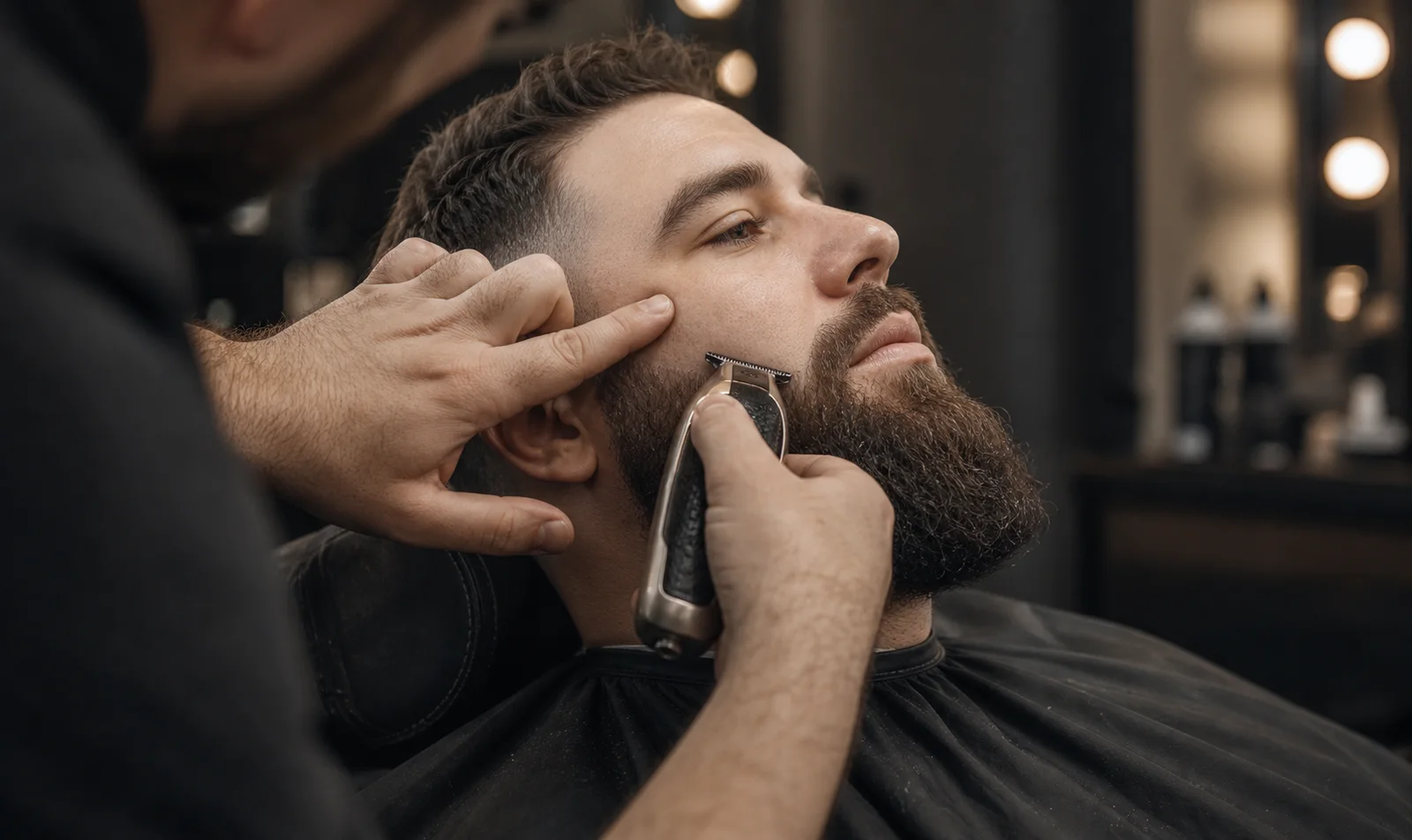
Beard blending connects sideburns, cheeks and longer facial hair without erasing the density that gives the beard its shape. The goal is a controlled transition that supports the haircut and beard as one design.
Quick answer
What to remember.
- The goal is a controlled transition that supports the haircut and beard as one design.
- Decide where the haircut ends and beard transition begins.
- Use light pressure over facial contours, monitor blade heat and avoid irritated skin.
- A measured beard fade creates a cohesive finish without sacrificing the fullness the client wants.
Why beard fading and blending matters
Beard blending connects sideburns, cheeks and longer facial hair without erasing the density that gives the beard its shape.
The goal is a controlled transition that supports the haircut and beard as one design.
A measured beard fade creates a cohesive finish without sacrificing the fullness the client wants. This is why the skill belongs in a complete service process rather than being treated as an isolated trick.
Four principles to learn first
Use these principles as checkpoints. Work on one at a time until you can explain what it changes in the result.
- Decide where the haircut ends and beard transition begins.
- Work through known guard lengths in narrow zones.
- Protect density through the jaw and chin.
- Check the transition from front and profile.
Practise it safely and deliberately
Mark a compact transition zone on a mannequin beard, record the guard sequence and compare both profiles after each stage. Keep the conditions consistent enough to compare attempts, and ask a trainer to observe the part of the process you cannot see yourself.
Use light pressure over facial contours, monitor blade heat and avoid irritated skin. A faster attempt is not progress if control, hygiene, consent or client comfort falls away.
What early progress looks like
Look for repeatability before speed. A strong beginner can recognise the plan, follow it and explain where the result changed.
- The sideburn transition is smooth but compact.
- Jaw and chin density remain intentional.
- The fade connects visually with the haircut on both sides.
Sydney training context
How this topic fits into Sydney barber school training
Before selecting a Sydney barber school, ask how the program develops beard fading and blending: a beginner’s guide from explanation to controlled practice. Specific answers are more useful than a long list of techniques with no detail about feedback.
The phrase “best barber school” is not an objective accreditation or a guaranteed outcome. The best choice for someone who wants to learn practical barbering skills depends on program status, supervised practice, trainer feedback, safety, total cost and fit with their intended pathway.
People who want to become a barber in Sydney should check current qualification and employment requirements separately from the marketing of any short course.
For a transparent example, review The Guild's private barber training program in Sydney, including its curriculum, A$5,000 fee and non-accredited status.
The Guild
Build the skill through corrected repetition.
Explore The Guild’s private 12-week curriculum and see how practical lessons, feedback and supervised training fit together.
View the curriculum →